
February Garden Tasks

A practical, early‑season checklist to bridge winter and spring
As winter begins to loosen its grip, February offers a quiet but important window to prepare for the growing season ahead. Days are slowly lengthening, stored plants need a quick check, and early seed‑starting begins to take shape. Even though the garden is still resting under snow, a few thoughtful tasks now will make the transition into spring smoother and more enjoyable. Here are some helpful ways to get your February garden off to a strong start.
Clean and sharpen pruning tools
Late winter pruning begins soon, if you haven’t already done so, this is a perfect time to sharpen secateurs, oil moving parts, and clean blades to prevent disease spread.
Check this article on tips on tool care: End of Season Tool Care – Kamloops Garden Club (link)
Inspect overwintered plants and stored bulbs
Check dahlias, cannas, gladiolus, and other stored tubers for rot or shriveling. Discard any that are soft or moldy. Lightly mist overly dry tubers or add a bit of dry medium (peat, sawdust) to stabilize moisture.

Monitor houseplants for winter stress
Low light and dry indoor air can cause pests like spider mites or fungus gnats. Give leaves a gentle wipe, check soil moisture, and rotate plants for even growth.
Have a look at this article for more information on winter houseplant care: Winter Houseplant Care – Kamloops Garden Club (link)
Start more seeds indoors
February is ideal for:
-
-
-
-
-
- Onions and leeks (if not already started)
- Celery and celeriac
- brussels sprouts and broccoli
- Slow‑germinating herbs (rosemary, thyme, oregano)
- Early flowers such as violas, snapdragons, and pansies Review your seed-starting calendar and adjust based on your setup and desired transplant dates.
-
-
-
-
See this article for more details on starting seeds: Garden Prep & Seed‑Starting Guide – Kamloops Garden Club (link)

Cold stratify seeds
Catnip, lavender, hyssop, cilantro, black-eyed Susan, and lupine are some of the seeds you can put in the fridge now so they’ll be ready for spring planting.
You can also use recycled plastic containers like milk jugs as mini-greenhouses to shelter seeds outside. Planting them in the cold allows for cold stratification during the winter exposure so the seeds can “wake up” naturally with the spring weather.
Review and refine your garden plan
Fine-tune your layout, crop rotations, and succession planting ideas. Consider drought‑tolerant or xeriscape additions like yarrow, blanket flower, and Russian sage. Revisit resources such as Okanagan Xeriscape for inspiration.

Order seeds and summer bulbs early
Popular varieties sell out quickly. February is the sweet spot for ordering dahlias, lilies, and specialty annuals before spring rushes in.
Check outdoor structures after winter storms
Inspect fences, trellises, raised beds, and cold frames for damage. Heavy snow and freeze–thaw cycles can loosen screws or warp boards.
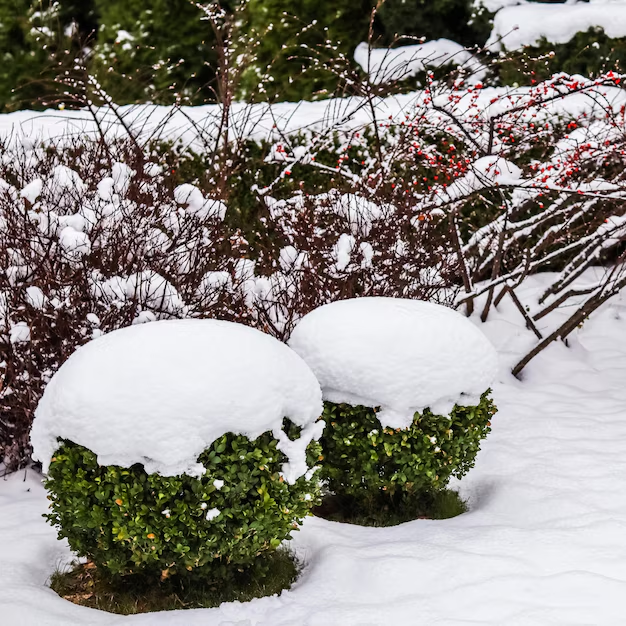
Gently remove snow from shrubs and evergreens
Continue brushing off heavy, wet snow to prevent breakage. Avoid shaking branches — lift snow upward instead.
Watch for freeze–thaw heaving
Perennials and fall-planted bulbs can be pushed upward by fluctuating temperatures. Gently press exposed crowns back into place and add mulch if needed.
Top up bird feeders and clean feeding areas
Birds help with early-season pest control, and February is still a tough month for them. Clean feeders to prevent disease spread.
Check stored soils and amendments
Make sure you have enough seed-starting mix, compost, and perlite. Break up any frozen bags stored outdoors so they’re ready when you need them.
Browse local workshops and garden club events
February is a great month for learning. Many clubs and nurseries offer pruning demos, seed-starting classes, and xeriscape talks.
These seminars take place at the Art Knapp’s location at 420 Nunavut Way. No preregistration is necessary. Check out their Facebook page with the following link: Art Knapp Facebook (link)

Try these tips to bring a hint of spring indoors:
Force Bulbs Indoors – You can force any bulb indoors. If you simply cannot wait until spring to see blooms these flowers will make quite a show either planted in a pot of soil or a low dish of water and gravel or marbles:
- Amaryllis
- Narcissus
- Daffodils
- Tulips
- Hyacinths
Force Branches Indoors – Consider pruning a few branches from some flowering shrubs and trees. Make a clean cut and arrange the branches in a vase of clean water to force an early bloom.
Flowering fruit trees make great branch sources as well as:
- Forsythia
- Dogwood
- Magnolia
- Pussy Willow
Comments
February Garden Tasks — No Comments
HTML tags allowed in your comment: <a href="" title=""> <abbr title=""> <acronym title=""> <b> <blockquote cite=""> <cite> <code> <del datetime=""> <em> <i> <q cite=""> <s> <strike> <strong>